Service
Shower Waterproofing in the Treasure Valley, Idaho
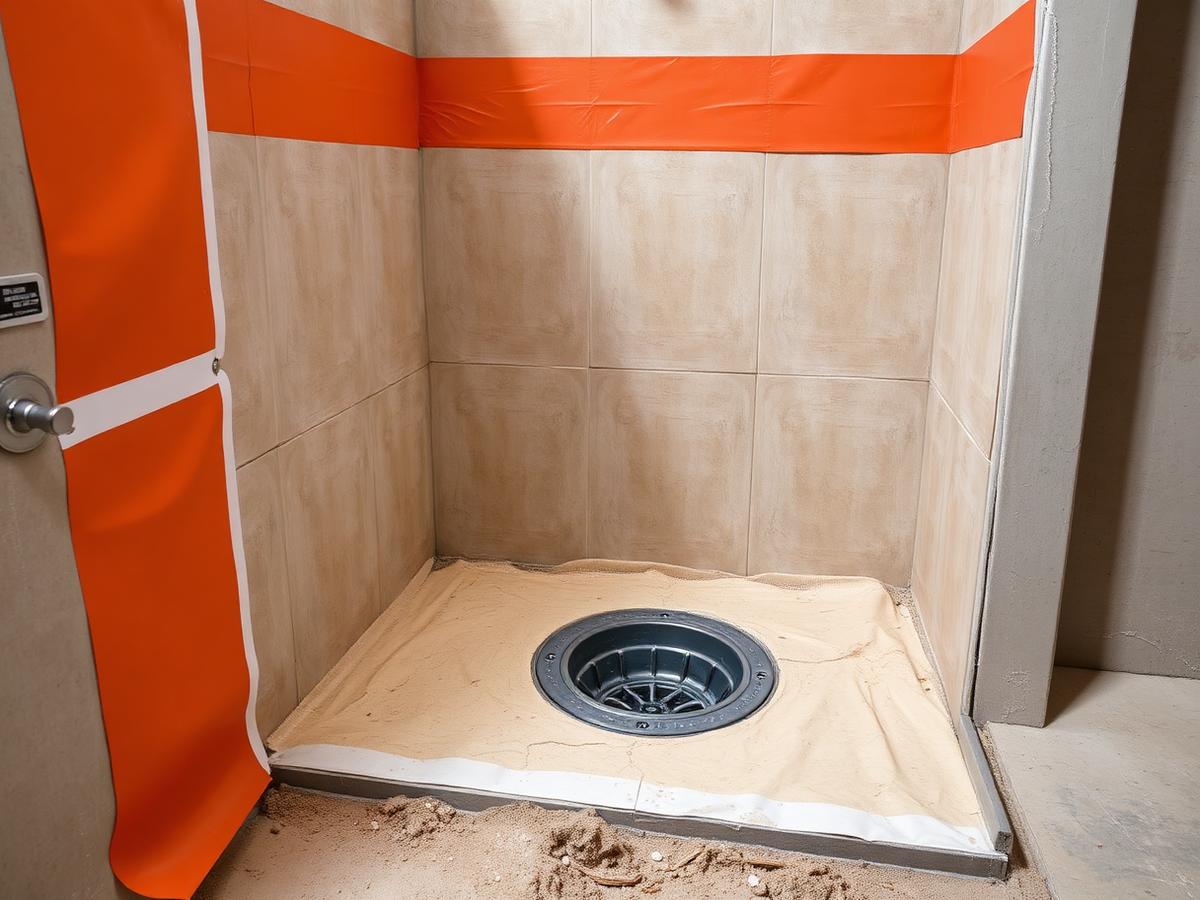
The layer behind the tile: one complete manufacturer's system, banded at every corner and penetration, and flood tested before tile.
Short answer
Shower waterproofing is the continuous barrier between the tile and the structure of your house. It is installed as a system — membrane, corner pieces, seam banding, pipe seals and a matched drain flange from the same manufacturer — because those components are tested together and mixing brands voids the warranty that makes the system meaningful. It is the part of a shower that decides whether the room is still sound in fifteen years.
How shower waterproofing actually fails
Failures are rarely a hole in the middle of a wall. They happen at transitions — where two planes meet, where a pipe passes through, where the wall membrane is supposed to lap over the pan. Water finds the one place where the system was interrupted, and then travels along the framing until it appears somewhere that looks unrelated to the shower.
- Corners taped instead of banded with the manufacturer's preformed pieces
- A drain flange from one brand paired with a membrane from another
- The wall membrane terminated behind the pan instead of lapped over it
- Mixing-valve and shower-arm penetrations left unsealed
- Tile set over green liquid membrane before it fully cured
- No flood test, so nobody found out until the ceiling below stained
A shower can leak steadily for years with no visible symptom inside the shower itself. By the time flooring cups or drywall darkens on the far side of a wall, the framing has usually been wet for a long time.
The systems we build with
There is more than one legitimate way to waterproof a shower. What is not legitimate is assembling parts from three suppliers and hoping the chemistry agrees. We select one system per shower and install it complete.
| System type | How it works | Best suited to |
|---|---|---|
| Bonded sheet membrane | A polyethylene or fleece-laminated sheet bonded to the substrate with thinset, with banded seams | Most custom showers; tile can be set as soon as the thinset sets |
| Liquid-applied membrane | Rolled or brushed on in coats with reinforcing fabric at corners and seams | Complex geometry, benches and niches with many inside corners |
| Foam board system | Waterproof foam panels with sealed joints, doubling as the substrate | Curbless builds, prefabricated sloped trays, fast schedules |
| Traditional mortar bed with a pan liner | A sheet liner under a sloped mortar bed draining to a weep-hole drain | Repairs and matching existing construction; less common in new work |
The flood test is not optional
Before tile, the drain is plugged and the shower floor is filled with water and left standing. The level is marked and checked after a sustained hold. If it drops, we find out then — when the fix costs an afternoon — rather than after the tile, glass and grout are in. Where the shower is over a finished space, we check the ceiling below during the hold as well.
We photograph the waterproofing before it is covered and include those photographs in the project record. You should ask any shower contractor for the same thing. It is the only evidence that will ever exist of the most important layer in the build.
Preparing for the build
Before the first day, clear the bathroom and the route to it, take anything off the walls that shares framing with the shower, and tell us which bathroom stays in use and where the crew can park. We bring floor protection, door containment and dust control, isolate the water supply at a point we show you, and clean the work area at the end of each day.
- Selections — tile, grout, valve trim, drain and glass — are confirmed before demolition so a lead time cannot stall the build.
- In a single-bathroom home we sequence the work so the shower is out of service for the shortest possible stretch, and we say up front how long that is.
- Pets and children are kept clear of the work area; there are open drains, power tools and wet membrane in there for days.
Timeline and site conditions
Most single-shower projects run roughly two to three weeks on site once materials are on hand: protection and demolition, framing corrections and blocking, plumbing and electrical rough-in, the complete waterproofing system with its cure and flood test, tile setting, grout, then glass. Glass is templated after tile is set, so the panel often arrives a week or two after the shower already looks finished. Your written scope carries the schedule for your specific shower rather than a stock number.
Conditions found after demolition change that schedule more often than anything else — rot at the base of a wall, a drain that is not where it should be, framing out of plane, or an older pan with no membrane behind it. We photograph what we find, price it, and get your agreement before we carry on.
What drives the price of shower waterproofing
Estimates are written after we have seen and measured the shower. We do not publish prices, because a shower quoted sight-unseen is a guess. These are the factors that move the number most, in roughly the order they matter:
- Size of the wet area and how high the tile runs — square footage of tile and membrane is the base of the estimate.
- Whether the drain and valve stay where they are. Moving either means opening the floor or the wall and coordinating a licensed plumber.
- Floor structure. A joisted floor lets a curbless pan be recessed; a slab often means either a ramped approach or cutting concrete.
- Tile choice. Large-format panels, mosaics, natural stone and any pattern that needs mitred or mapped joints all add setting time.
- Waterproofing system specified, and whether a linear drain, bench, niche or steam enclosure has to be integrated into it.
- Glass — a fixed panel, a door, low-iron glass or a custom radius each price differently.
- Conditions behind the old shower, which is why nothing is quoted before we have seen it.
Written scope, exclusions and change orders
Every project is built from a written scope that names the waterproofing system by manufacturer, the drain type, the tile and its layout, the glass, the schedule and the price. It also lists what is excluded, because that is where disputes come from.
Typically included
- Protection, containment, demolition and disposal
- Framing corrections and blocking for benches, niches and grab bars
- Plumbing and electrical rough-in for the valve, drain and any light or fan in the wet area
- The complete waterproofing system, flood test and pan slope verification
- Tile setting, grout, sealing where the material requires it
- Glass templating and installation, final clean and a punch-list walkthrough
Typically excluded and stated as such
- Work outside the shower: vanities, mirrors, bathroom flooring, paint beyond patching
- Hidden rot, mould remediation or structural repair discovered after demolition
- Moving walls, windows or the room's ventilation route
- Whole-house water treatment, though we will tell you when hard water is the real problem
- Owner-supplied materials, which we install but do not warrant
Anything that changes the scope becomes a written change order with its price and schedule effect, agreed before the work is done. Nothing is carried out on a verbal instruction.
Permits and inspections
A like-for-like tile shower replacement often needs no permit, while relocating a drain, altering supply plumbing, changing framing or adding electrical usually does. Jurisdiction follows your address, and the Treasure Valley has several — Boise, Meridian, Eagle and Star each issue their own permits, and county addresses go through the county. We identify permit-triggering work in the written scope and confirm the requirement with the authority for your address before work starts, rather than assuming.
Warranty and aftercare
Our craftsmanship is covered by a 1-year warranty, alongside the manufacturer warranties that come with the waterproofing system and materials specified in your scope.
Idaho contractor registration RCE-57919. Bonded and insured, with the current certificate of insurance provided in writing with every estimate. At handover you get the product documentation for the waterproofing system and tile, plus written cleaning guidance suited to the surfaces we installed and to Treasure Valley water. If something is not right, tell us and we will come back. Request an estimate or call (208) 891-1890.
Frequently asked questions
Related reading
Ready to plan your shower?
Tell us about the shower and what is not working. We will follow up, arrange a visit and put a written scope and price in front of you.